
Abstract
This article provides an in-depth look at the common types of structural steel sections used in manufacturing and details the various cutting and processing methods involved. Understanding these elements is crucial for achieving precision, efficiency, and quality in steel structure fabrication.

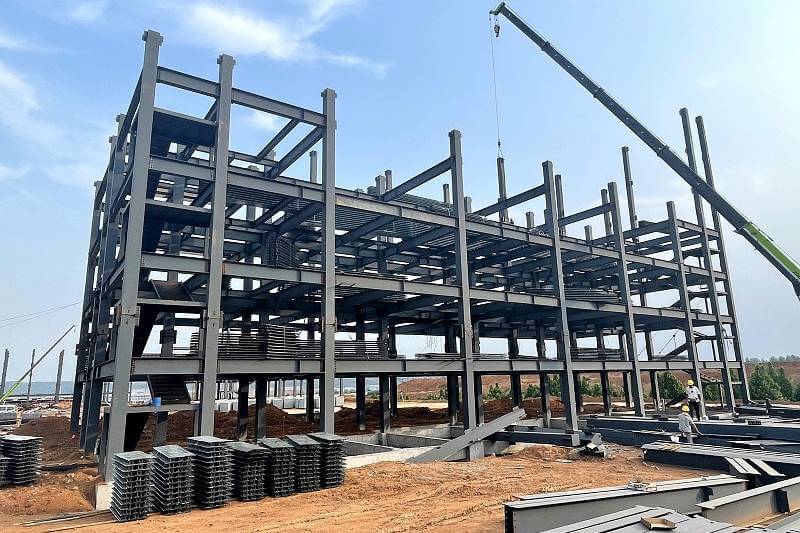
The fabrication of steel structures relies on the precise shaping and assembly of various steel sections. This process begins with understanding the different types of steel sections available and the cutting techniques required to prepare them for assembly. This guide explores the essential profiles and cutting processes that form the backbone of steel construction.
Common Types of Structural Steel Sections
Structural steel sections are the building blocks of construction and are typically created through hot-rolling or welding. The most common types include:
H-shaped Sections:
This category includes both hot-rolled H-beams and welded H-shaped steel. Hot-rolled H-beams are classified into wide-flange (HW), medium-flange (HM), and narrow-flange (HN) series, with sectional heights ranging from 100mm to 700mm . Welded H-sections are fabricated by joining steel plates, offering flexibility in dimensions, with common sectional heights from 100mm to 1200mm and flange thicknesses from 5mm to 36mm . These are widely used as primary beams and columns.
I-beams:
Characterized by their classic “I” cross-section with tapered inner flange surfaces (typically a 1:6 slope) . They are often specified by their nominal height in centimeters (e.g., I20a for a 200mm high beam) and are commonly used as beams .

Angles:
Available as equal angles (with equal leg lengths from 20mm to 200mm) and unequal angles (with leg lengths from 25x16mm to 200x160mm) . They are extensively used in trusses, towers, and as bracing elements.
Channels (C-shaped Sections):
Hot-rolled channels have sectional heights from 50mm to 400mm . They are often employed as purlins, in framing, and as structural braces.
Steel Tubes:
These include seamless tubes (conforming to standards like GB8162, with common sizes from 32×2.5mm to 480x16mm) and welded tubes (including spiral welded pipes from 219x5mm to 1420x16mm) . Their excellent compressive and torsional strength makes them ideal for trusses, space frames, and tubular columns.
Cold-formed Steel Sections:
These are made by bending thin steel sheets (typically 1.5-6mm thick) at room temperature into shapes like C-sections, Z-sections, and rectangular hollow sections . They are lightweight and commonly used as purlins, wall girts, and in light-gauge steel framing.
Cutting and Processing of Steel Sections
The transformation of raw steel sections into functional components involves several critical processing steps to ensure they meet precise dimensional and quality standards for assembly .

1.Marking and Layout (Setting-Out)
This initial step involves transferring the shape, hole centers, and other markings from design drawings or templates onto the steel surface . It requires high accuracy as it guides all subsequent cutting and machining. Tools commonly used include steel scribers, punches, and marking gauges .
2.Cutting
Several cutting methods are employed, chosen based on material type, thickness, and the required quality of the cut edge.
·Shearing
Used for cutting thinner steel plates (generally up to 12mm thick). It’s a mechanical process but can cause work hardening on the cut edge, which may need to be removed for critical applications.
·Sawing
Delivers a high-quality cut and is the preferred method for cutting large sections like H-beams, I-beams, and channels . Modern cold sawing techniques use toothed blades with air cooling to avoid affecting the material’s properties.
·Gas Cutting (Oxy-Fuel Cutting)
Uses a high-temperature flame from oxygen and fuel gases (like acetylene or propane) to melt and blow away the metal. It is versatile for cutting thick materials (over 5mm) and complex shapes, and can even be used to prepare weld edge preparations like V- or K-bevels . Methods range from manual to fully automated CNC cutting.

·Plasma Arc Cutting
Employs a highly concentrated “plasma arc” that is much hotter than a standard gas flame. This method is highly effective for cutting stainless steel, alloy steels, and non-ferrous metals that are difficult to cut with oxy-fuel.
3.Edge Preparation (Edge Machining)
For components that require high-quality welded joints, especially those needing full penetration welds, the edges are often machined. This process creates a clean, precise bevel (like a V, K, or U-groove) to ensure proper weld penetration and strength . Common methods include:
·Planer Machining
Uses large planer mills to machine the edges of long components.
·Milling:
Provides a very precise finish for component end surfaces, such as ensuring column ends are perfectly flat for uniform bearing on base plates .
4.Hole Making (Drilling and Punching)
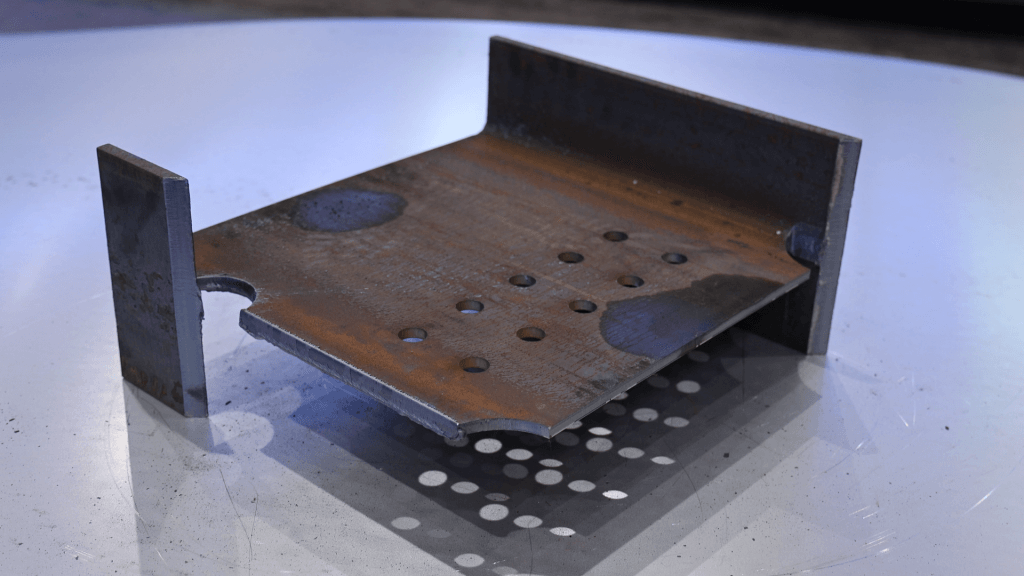
Creating holes is essential for bolt connections. The two primary methods are:
·Punching:
A high-speed process suitable for thinner plates. However, it can cause work hardening around the hole wall .
·Drilling:
Produces a higher quality hole with a better surface finish. Equipment ranges from portable magnetic drills to large multi-spindle and CNC drilling machines, which are used for accuracy and efficiency, especially for parts with multiple holes .
Conclusion
The successful fabrication of steel structures hinges on a deep understanding of the diverse range of available steel sections—from heavy hot-rolled beams to lightweight cold-formed members. Equally critical is the mastery of various cutting and machining processes, from initial layout to precise cutting, edge preparation, and hole making. By selecting the appropriate section and applying the correct processing techniques, manufacturers can ensure the production of high-quality, safe, and efficient steel structures that meet the demanding requirements of modern construction.


